
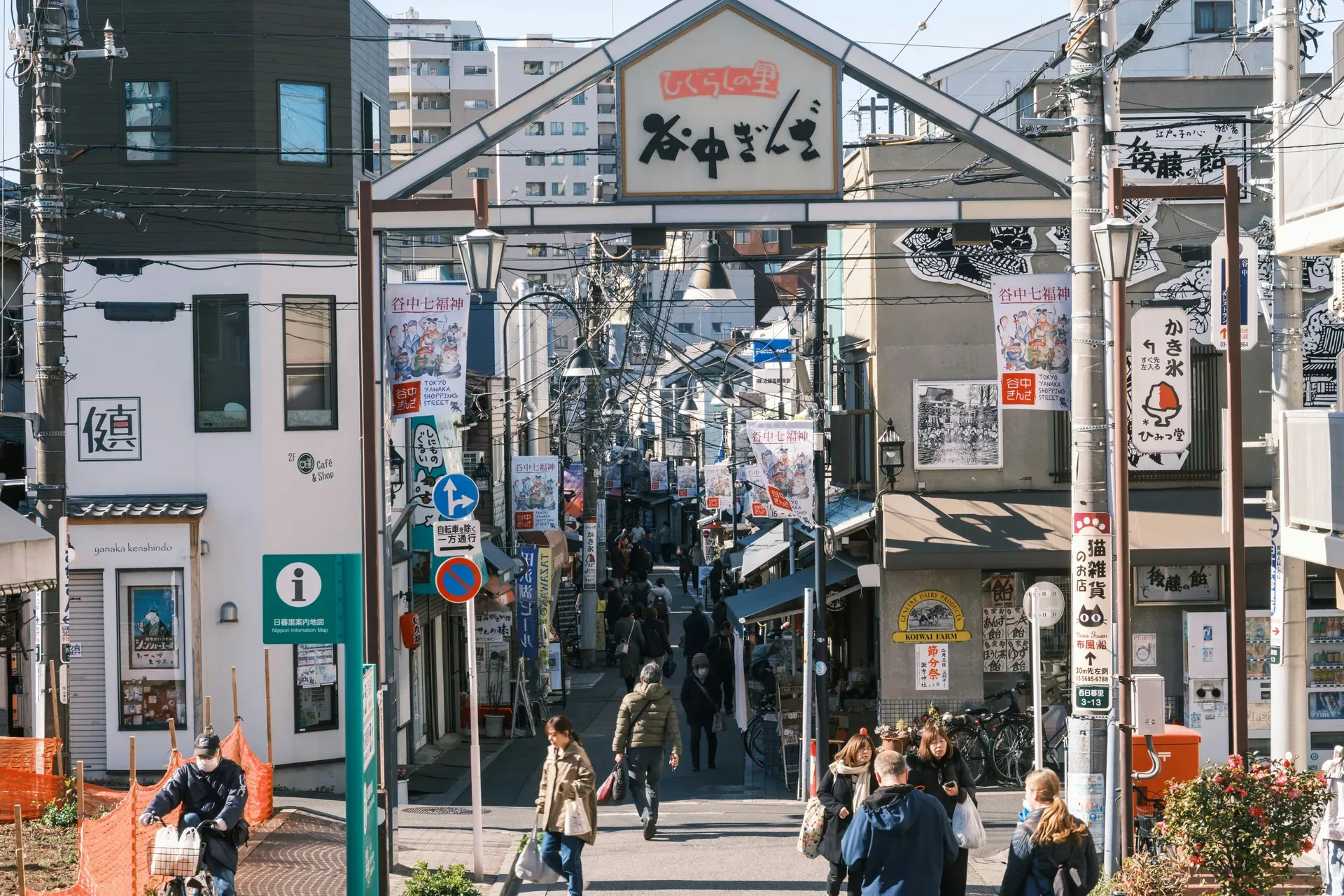
Yanaka Ginza spans 170 meters through Tokyo's Taito Ward, preserving the low-rise wooden architecture of the Showa era. Sixty family-run shops line this pedestrian lane, offering a direct look at post-war neighborhood life.
Sixty family-run shops pack into a 170-meter paved lane in Tokyo's Taito Ward. Yanaka Ginza operates as a traditional shotengai (open-air shopping street), maintaining the low-rise wooden proportions of the mid-20th century. Visitors walk past open storefronts selling minced meat cutlets, baked donuts, and green tea. The street sits at the bottom of the Yuyake Dandan, a 36-step concrete staircase connecting the higher elevation of the Nippori Station area to the flat shopping district below.
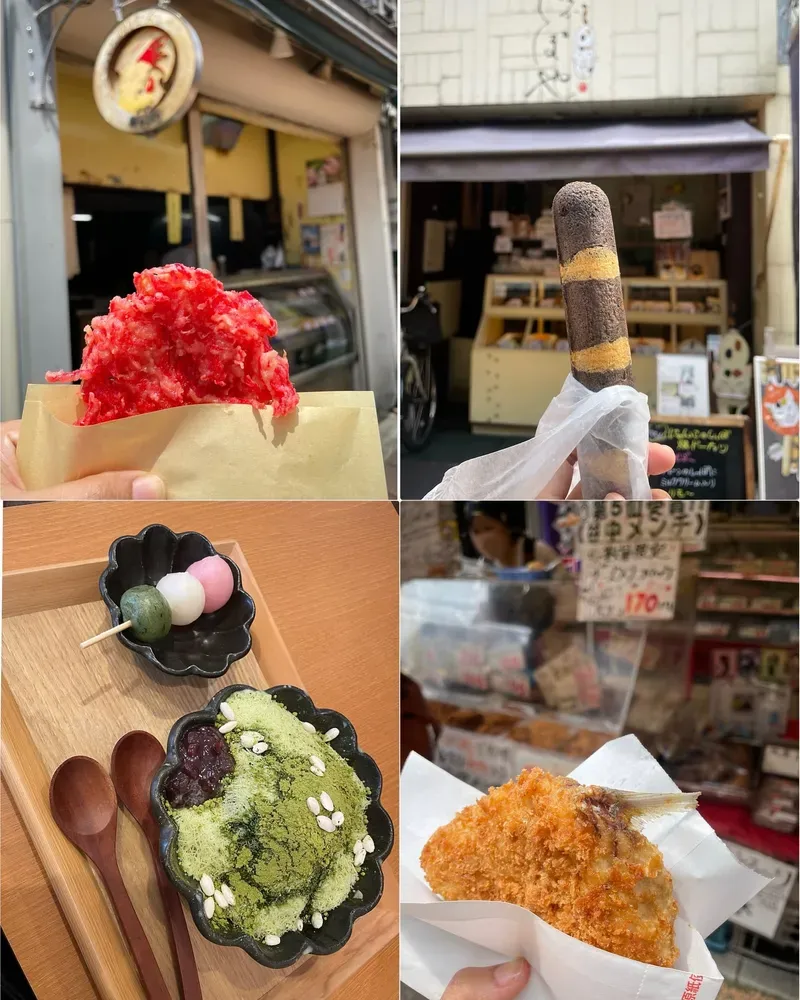
The name Ginza usually evokes images of luxury boutiques in Chuo Ward, but local shopping streets across Japan adopted the moniker in the 20th century to project prosperity. Yanaka Ginza delivers the opposite of luxury. It offers 50-yen croquettes served in paper sleeves and draft beer poured into plastic cups. The sound of sizzling oil from the butcher shops mixes with the clatter of wooden sandals and the hum of bicycle tires. Shopkeepers live above or behind their stores, hanging their laundry on second-floor balconies. Canvas awnings stretch over the pedestrian-only road, providing shade during the humid summer months. Stray cats sleep on the warm asphalt or watch from the steps. The smell of frying meat and roasting tea leaves fills the three-meter-wide corridor.
Crowds peak on weekends, transforming the quiet lane into a dense stream of pedestrians. Navigating the street becomes difficult, especially for visitors carrying large luggage or pushing strollers. Bicycles face strict restrictions during these peak hours. Weekday afternoons offer a quieter environment, allowing clear views of the unpainted wood facades, sliding glass doors, and hand-painted shop signs. Most businesses close their shutters by 18:00, plunging the street into darkness shortly after sunset. Arrive by 15:00 to buy side dishes from the local butchers and secure a spot on the stairs before the sun drops behind the street gate.
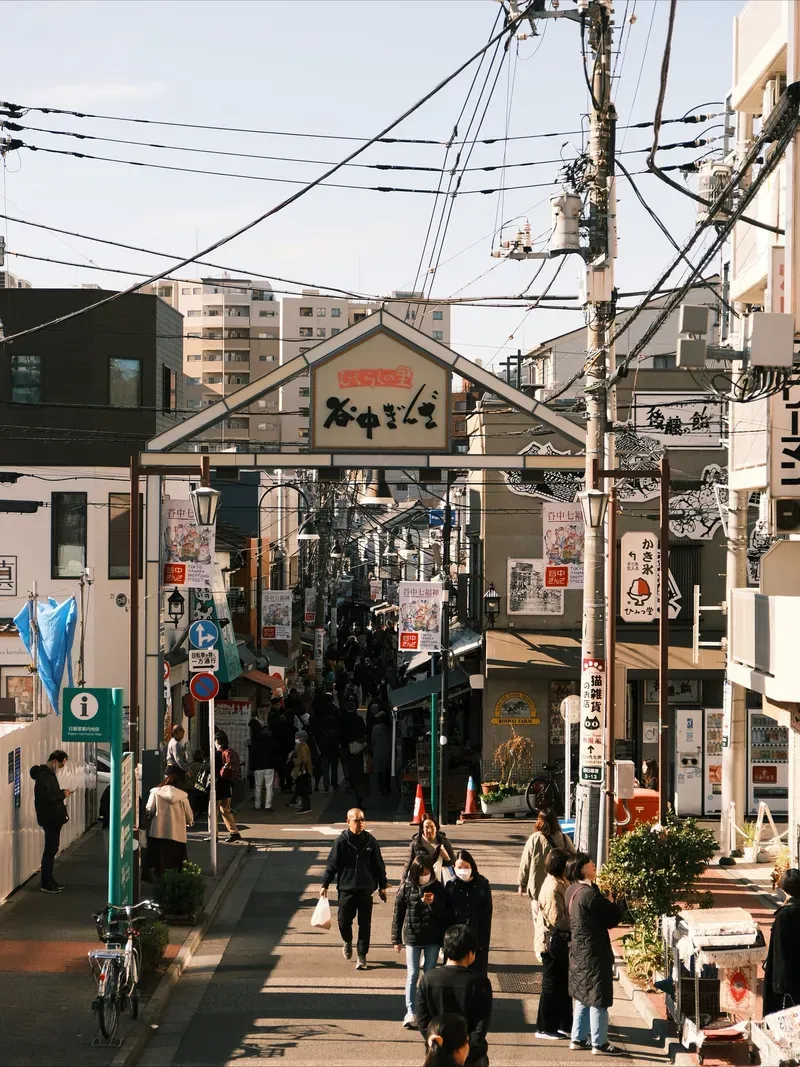
The shopping street formed spontaneously in 1945. Residents returning to the area after World War II set up informal stalls to trade essential goods. Yanaka survived the 1923 Great Kanto Earthquake and the 1945 Allied firebombings, leaving its pre-war street grid and many wooden structures intact. This physical survival allowed the shotengai to develop along traditional neighborhood lines rather than being incorporated into large-scale urban planning projects like those in Shinjuku or Shibuya. The black market origins defined the street's initial layout. Vendors claimed small, three-meter-wide plots, building temporary shacks that eventually solidified into permanent wooden structures. This piecemeal construction created a jagged, irregular roofline that persists today.
During the Showa era (1926–1989), the street functioned as the primary grocery and supply center for the surrounding Yanesen district. Butchers, fishmongers, and greengrocers operated out of the ground floors of their homes. Daily life revolved around these open-air counters. During the 1960s economic boom, the street thrived. Over 10,000 shoppers visited daily to buy fresh tofu, seasonal vegetables, and fish caught in Tokyo Bay. As Tokyo modernized through the 1970s and 1980s, developers targeted low-lying neighborhoods for high-rise apartment construction. Yanaka residents organized against these proposals. They established strict local building codes to block structures that would cast shadows over the narrow lane or disrupt the architectural scale.
The advent of large supermarkets in the 1990s threatened this ecosystem. Many traditional shotengai across Japan became shutter streets as local shops went bankrupt. A major generational shift occurred in 2008 to prevent this fate. Older shop owners retired, passing businesses to their children or leasing spaces to new entrepreneurs. The local shopping district association implemented a revitalization plan that banned corporate chain stores and required new businesses to match the existing visual style. Individual owners converted their family trades to target foot traffic. A traditional butcher transitioned to selling hot minced meat cutlets to pedestrians. A tea shop adapted its inventory to include single-serve cups for walkers. Avoid visiting on Mondays or Tuesdays, as these are the standard rest days for the majority of the original families.
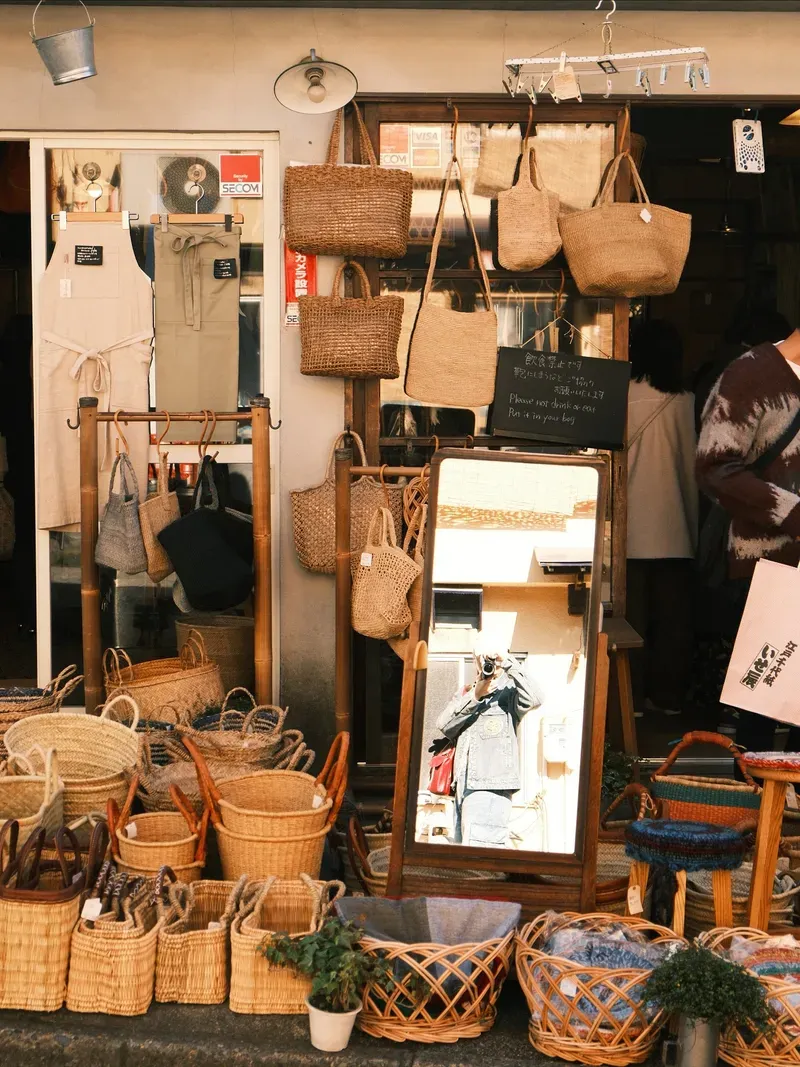
The 170-meter thoroughfare runs east to west, framed by two distinct entry points. The eastern approach requires descending the Yuyake Dandan (Sunset Steps), a 36-step concrete staircase. The western end connects to the flat, winding roads of Sendagi. The street measures just three to four meters wide. This narrow width forces pedestrians into close proximity with the open storefronts, eliminating the boundary between the public road and the private shops. Narrow alleys, less than a meter wide, branch off the main spine. These side paths lead to hidden courtyards, small shrines, and residential entrances. Potted plants line these alleys, as residents lack proper yards. Hydrangeas bloom in June and morning glories in August, growing out of plastic buckets pushed against the wooden walls.
Buildings rarely exceed two stories. Construction materials consist primarily of dark, aged timber, corrugated metal roofing, and sliding glass doors. The architecture relies heavily on the machiya style, where the commercial space occupies the front of the ground floor and the family living quarters sit in the back and on the second level. Shop owners display their goods on slanted wooden racks or directly in plastic crates stacked on the pavement. Echigoya Honten, a historic liquor store, uses upturned yellow milk crates as seating for customers drinking draft beer. Paper lanterns hang from the eaves, illuminating the signs as dusk approaches.
Overhead, a dense web of black utility wires crisscrosses the sky, a common feature of older Tokyo neighborhoods that avoided underground infrastructure projects. Seven hand-carved wooden cats hide among these awnings and roof tiles. Finding them requires looking up from the street-level merchandise. The ground consists of standard grey asphalt, worn smooth by decades of foot traffic. Summer temperatures frequently exceed 30°C. The tight layout traps humidity, and the lack of large trees means direct sunlight hits the pavement at midday. Vending machines along the route often sell out of water during summer festivals. Wheelchair users face challenges at the Nippori entrance due to the stairs. A steep bypass road sits to the left of the steps, but the flat approach from Sendagi Station provides a safer, level route for anyone with limited mobility.
Yanaka Ginza functions as a living museum of shitamachi culture. This term translates to low city and refers to the working-class neighborhoods where merchants and artisans lived during the Edo and Showa periods. The street preserves the social dynamics of that era. Shopkeepers yell greetings across the lane, and transactions happen face-to-face over wooden counters. The local shopping association enforces rules that prioritize community cohesion over maximum profit, actively rejecting buyout offers from national convenience store chains. During the autumn Matsuri, residents carry heavy portable shrines down the narrow shopping street, chanting and swaying to the beat of taiko drums. The shops close their fronts to make way for the procession, prioritizing the ritual over daily sales.
The area holds the nickname Cat Town. Stray cats have populated the surrounding temples and cemetery for decades, finding shelter in the narrow alleys and warmth on the asphalt. The community embraced this association as a core part of its identity. Bakeries like Yanaka Shippoya sell donuts shaped and patterned like the tails of different cat breeds. Stores stock feline-themed ceramics, tote bags, and stationary. The cats themselves often sleep on the Yuyake Dandan steps during quiet weekday afternoons, ignoring the cameras of passing tourists.
Buddhist traditions heavily influence the neighborhood's daily rhythm. The concentration of temples stems from the Edo period, when the Tokugawa shogunate relocated numerous Buddhist institutions to the city's northeast edge to protect Edo Castle from evil spirits. Today, this high density of religious sites limits commercial zoning, indirectly protecting Yanaka Ginza from large-scale development. Yanaka Cemetery, a 10-hectare graveyard holding over 7,000 plots, borders the shopping street. Monks in traditional robes walk the streets, purchasing supplies from the local vendors. Watch out for individuals dressed as monks near these temple entrances asking for mandatory donations, a common scam targeting foreign tourists.
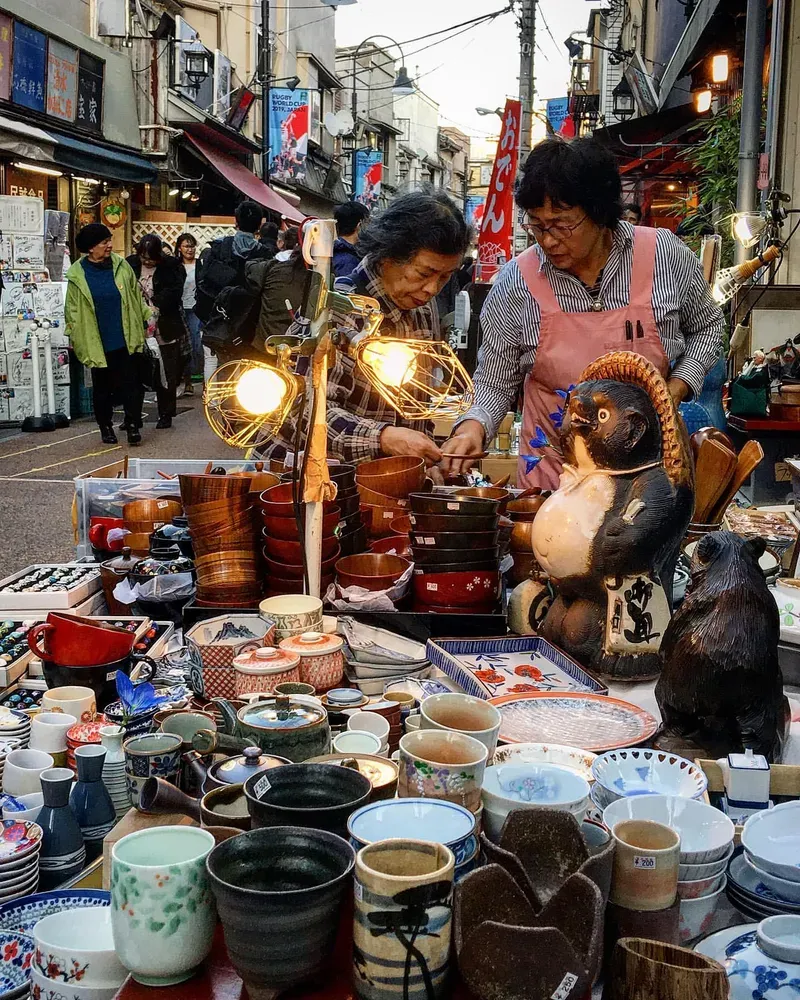
Seven hand-carved wooden cat statues are hidden on the rooftops and awnings of the shops.
Meat no Suzuki, a local butcher, frequently appears on Japanese television for its famous minced meat cutlets.
The stairs leading to the street are named Yuyake Dandan because they align perfectly with the setting sun.
Yanaka Shippoya bakes donuts shaped and patterned to look like the tails of different cat breeds.
The local shopping district association strictly prohibits corporate chain stores from opening on the street.
Customers at the historic Echigoya Honten liquor store sit on upturned milk crates to drink their beverages.
The nearby 10-hectare Yanaka Cemetery houses the grave of Tokugawa Yoshinobu, the last shogun of Japan.
The ideal time is between 15:00 and 17:00. This window allows you to browse the shops while they are fully open and secure a spot on the Yuyake Dandan steps for sunset.
Yes, stray cats live in the area. They usually avoid the busy weekend crowds but frequently sleep on the stairs or in the nearby cemetery on quiet weekday afternoons.
Most shops close on Mondays or Tuesdays for their weekly rest day. National holidays falling on a Monday push these closures to Tuesday.
Take the West Exit from Nippori Station and walk straight for five minutes. The road leads directly to the top of the Yuyake Dandan stairs overlooking the street.
No public restrooms exist on the 170-meter shopping lane. Visitors must use the facilities at Nippori Station or Sendagi Station before arriving.
Cash remains the primary payment method for street food and small purchases. Carry small bills like 1,000 JPY notes, as stall owners struggle to break 10,000 JPY bills for minor items.
The main shopping lane is flat and paved. However, the Nippori Station entrance requires navigating a 36-step staircase, so wheelchair users should enter from the Sendagi Station side.
Photography in the public street is allowed. Taking pictures inside individual stores or photographing the shopkeepers requires explicit verbal permission.
Over 15 stalls sell side dishes meant for snacking. Popular items include minced meat cutlets, grilled squid, croquettes, and sweet baked donuts.
Walking the street and buying a few snacks takes 60 to 90 minutes. Adding a walk through Yanaka Cemetery or Nezu Shrine extends the trip to three hours.
Browse verified tours with free cancellation and instant confirmation.
Find Tours